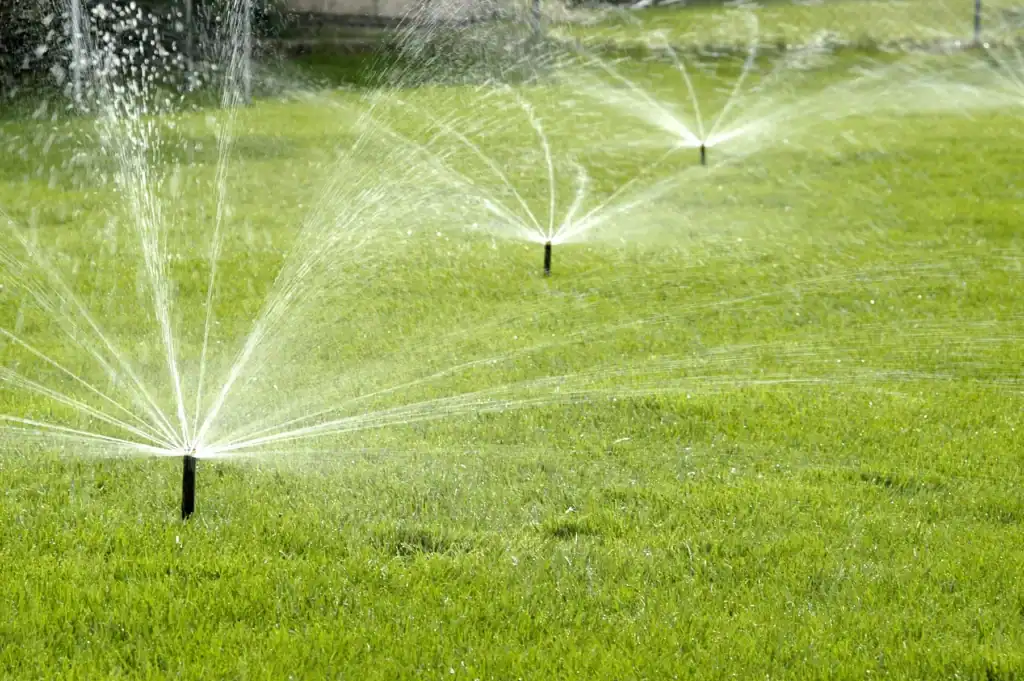

A head that stays down, or rises only partway, is not automatically a broken sprinkler. Most of the time the head is telling you that water is not arriving with enough pressure and flow to push the riser up and hold it there. The cause is usually upstream: a zone valve that is only partly open, a clogged filter, a regulator outside its flow range, a supply that cannot carry the zone, or a demand from the fitted nozzles that the supply never had a chance to meet. Sometimes it really is the head, its riser or the way it was installed. Work out which of those you have before you buy parts.
Start with one head or the whole zone
Walk the zone while it runs. This helps you choose where to start, but a single sprinkler staying down can still point to the flow and pressure available across the zone:
| What you see | What it usually means |
|---|---|
| One head down, the rest fine | The head or local connection, or insufficient zone flow and pressure to fully lift and seal that sprinkler |
| One head low, others fine, water bubbling at the base | A local riser or connection, or water escaping around a riser that has not fully lifted and sealed |
| Every head on the zone weak or down | Supply, isolation valve, filter, regulator, valve or zone demand |
| Every zone weak | Supply, meter, main isolation, filter or system regulator |
Before you open anything: five checks that are free
These five explain a surprising share of “dead zone” calls, and they cost nothing but a walk to the controller:
- The water supply is on and no isolation valve upstream is part closed.
- The controller is in Run or Auto, not System Off and not held by a rain delay.
- Any rain sensor loop is intact, with the factory jumper fitted if no sensor is connected.
- Battery controllers have fresh high-power alkaline cells. Long-life cells can be too weak to actuate a latching solenoid.
- The coil class matches the output. An AC coil on a DC-latching output is a documented cause of a valve that will not actuate.
Check the valve before you blame it
A solenoid valve can be electrically healthy and still pass little or no water. Voltage at the solenoid proves the output and the wire up to the coil; it does not prove the valve opened. If you have confirmed the command and the coil, look at the valve itself, and the anatomy of an irrigation valve shows what each part does: a flow-control stem wound shut, a bleed screw left open, debris on the diaphragm seat, or a zone whose demand sits below the valve’s published minimum flow. Opening a valve body means isolating and depressurising that line first.
Work upstream in the right order
When a whole zone is weak, the efficient order is: pressure at the regulator outlet, filter differential, valve, then supply. Each step eliminates a layer rather than guessing at it.
- Filter: a clean screen filter runs at roughly 20 to 30 kPa differential, and about 80 kPa is the service point. A dirty or undersized filter quietly steals pressure from every head.
- Regulator: a fixed reducer only holds its set-point inside its own flow range. A 20 mm unit rated 0.8 to 17 L/min will not regulate a 24 L/min zone at all, and the answer there is a different set-point, a different regulator or two zones.
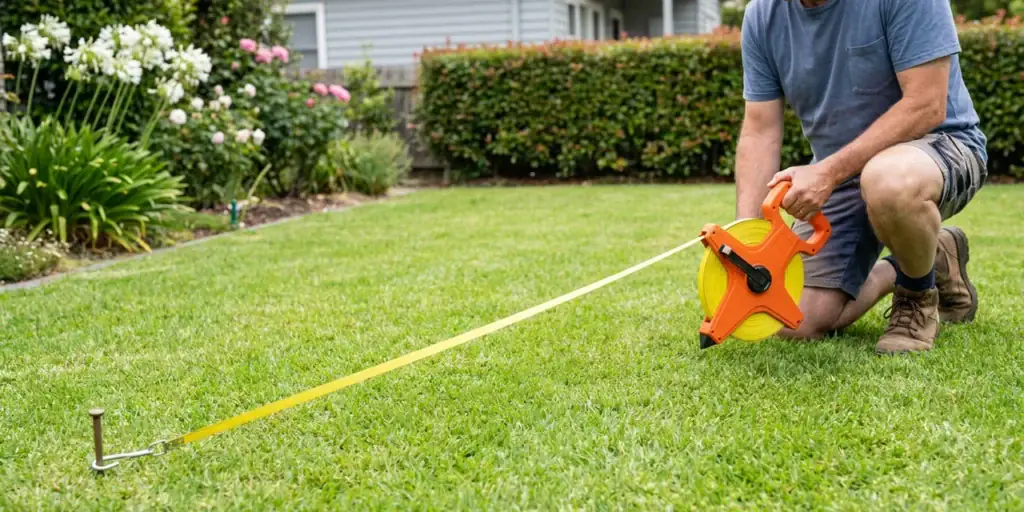
- Supply: if you have not measured what the tap delivers, do that now. A bucket test gives litres per minute, and a gauge on the tap nearest the meter gives static pressure. Static is not what the zone sees once water is flowing.
The measurement method is set out in how to calculate the output of your water supply, and the reasons pressure matters at the nozzle are covered in the benefits of pressure regulation. This article assumes you have one of those numbers; it does not repeat the method.
Then check what the zone is asking for
Zone demand is simple arithmetic: the number of sprinklers or drippers multiplied by their flow at the design pressure, taken from the nozzle chart rather than from the tap’s open flow.
For example, eight heads flowing 7.5 L/min each ask for 60 L/min. On a supply that tested at 40 L/min that zone cannot work at any regulator setting, and the lag will look like a pressure fault because it is one, caused by demand. The fixes, in order of cost, are fewer or smaller nozzles, two zones, or a different supply. A bigger pipe does not create water.
If your zone flows add up comfortably inside the supply but the heads still lag, the restriction is physical: a part-closed valve, a blocked filter, a collapsed or kinked lateral, or a regulator that is passing almost nothing.
When it is the head itself
If only one head is affected, check the supply as well as the head itself. With insufficient zone flow or pressure, one sprinkler may not rise fully and seal, often the first, last or highest head on the zone. Once you have checked that, look at these local factors:
- Turf has grown over the body, or the body was set too deep, so the riser cannot clear the grass.
- The riser is bent, cracked or separated from the lateral, which shows as water at the base rather than a spray.
- Grit or soil has worked into the wiper seal and the riser sticks partway.
- The wrong pop-up height was installed for the lawn, so a correctly working head still sits below the mown surface. Pop-up height and body height are different measurements, and this guide explains the difference.
Bodies are in the pop-up sprinkler range, and risers and seals under sprinkler risers and fittings.
Where this stops being a DIY job
Stop and call a licensed tradesperson when the fault is on the mains side of the connection, when the meter or the service pipe is involved, or when new fixed pipework is needed. Anything on the 230 to 240 V side of a controller, an outdoor transformer or a pump contactor is licensed electrical work; isolate and prove dead, and do not open the cabinet.
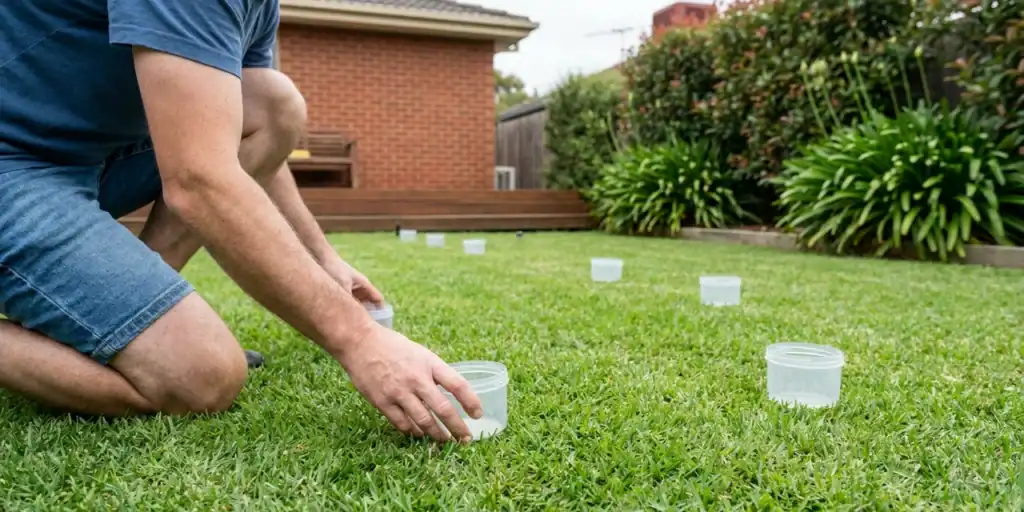
If you have restored flow but the coverage is patchy, the next task is a delivery check rather than another repair. The catch-can audit measures what each zone actually applies, and how to plan an effective sprinkler layout covers head spacing if the pattern itself is wrong.
When to get help
If the checks above point to the valve, the supply or a buried line, book a professional for service or installation.
Last updated: 12 November 2026