
Before choosing your irrigation gear, find out what your water supply can deliver. Start by measuring flow, or how much water comes out of the tap. Then check pressure if you have the right equipment.
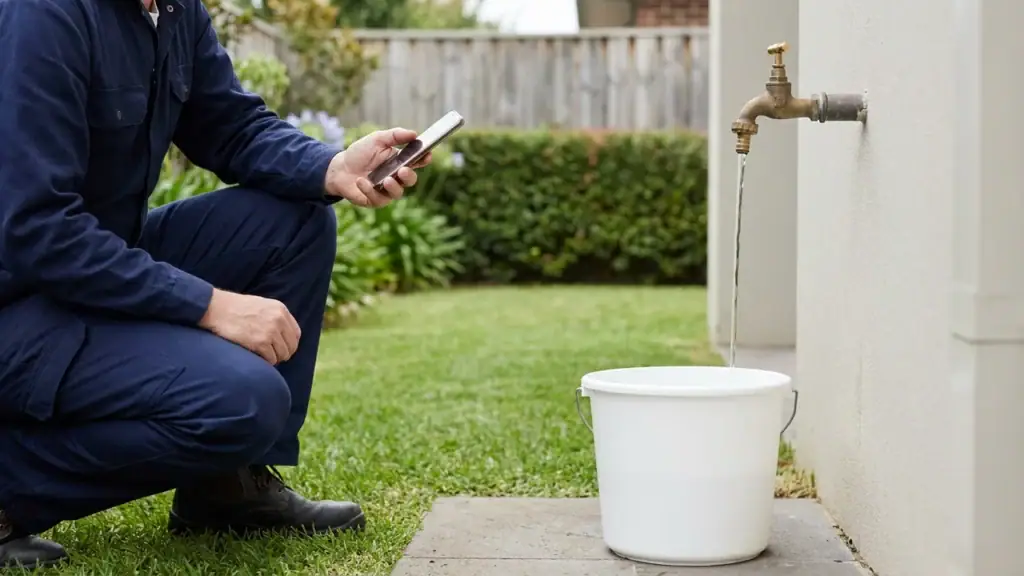
You can do the first test with a bucket and your phone. No specialist tools required.
1. Measure your garden tap’s flow
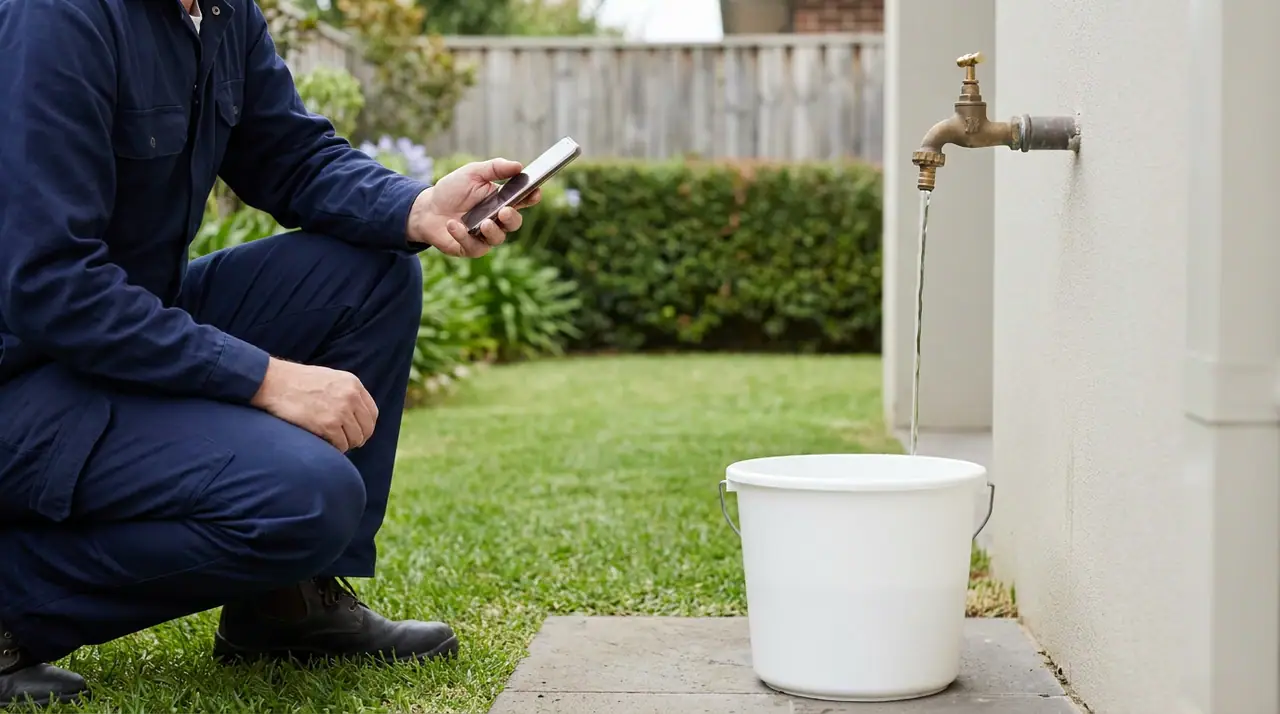
You’ll need a bucket of known volume, a timer and the garden tap you plan to use.
- Turn off other taps, appliances and irrigation using the same supply.
- Put an empty bucket under the tap.
- Open the tap fully and time how long it takes to fill the bucket to its known volume.
- Repeat the test and record the fill times.
Repeat readings at the same tap, then test any other taps you plan to use, as flow can vary between them. Record each tap separately. If your irrigation normally runs while other water is being used, take a separate reading under those conditions too.
Calculate flow in litres per minute (L/min)
Enter your bucket size and fill time in the calculator below to get litres per minute (L/min).
Prefer to work it out yourself?
Flow (L/min) = bucket size in litres × 60 ÷ fill time in seconds
For example, a 9-litre bucket filled in 10 seconds = 54 L/min.
That’s your open-tap flow reading. It doesn’t measure pressure or, by itself, tell you how many sprinklers can run together.
2. Check your pressure if you have a gauge
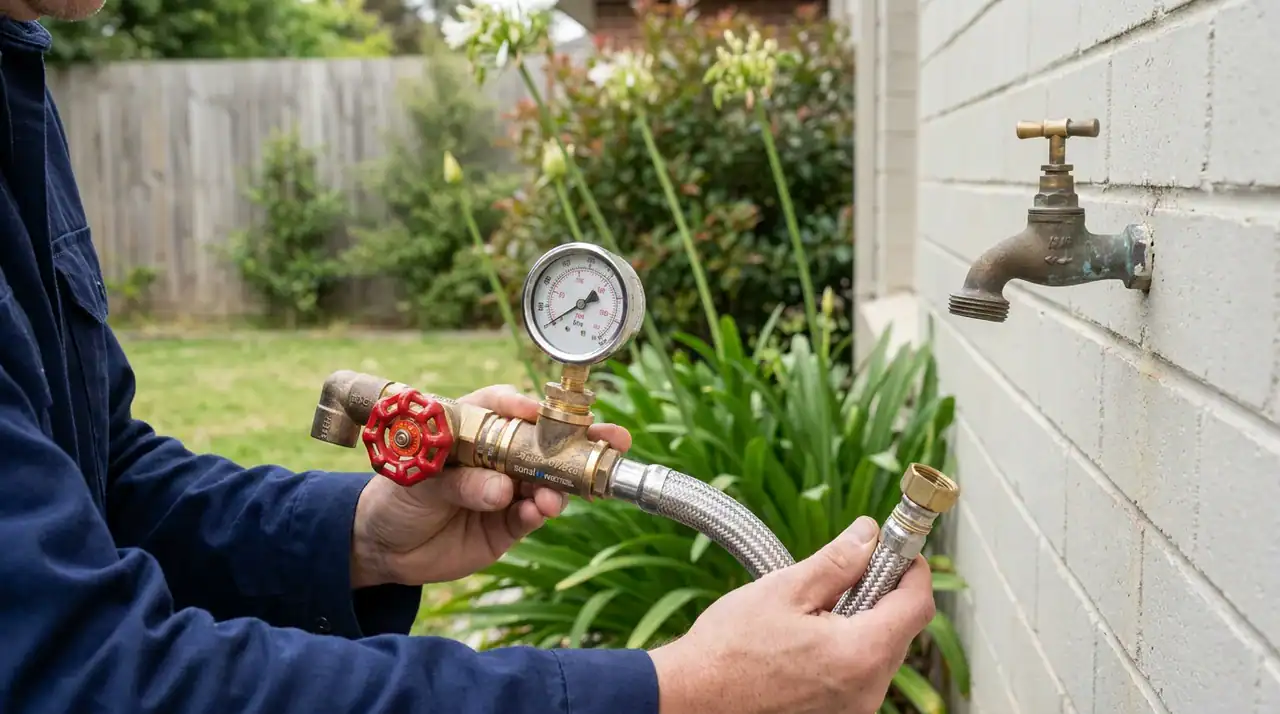
Pressure is the push behind the water, measured in kilopascals (kPa). To take a basic reading:
- Make sure no other water is running on the supply.
- With the tap closed, connect a suitable pressure gauge, using the correct adaptor if needed.
- Open the tap and record the reading.
With no water flowing through the gauge, this is static pressure. Pressure can change when the irrigation runs, so it isn’t the same as the operating pressure at a sprinkler.
Need the equipment? Our Irrigation Pressure & Flow Test Kit is an option for taking more detailed readings. Follow the instructions confirmed for the actual kit; this guide doesn’t cover a combined flow-and-pressure test procedure.
No gauge? Don’t guess. Keep your flow reading and mark pressure as unknown. You can still take the next step; pressure can be confirmed when a product choice or design needs it.
Keep your results handy
Record the tap used, bucket size, fill time, calculated flow and date. If you measured pressure, include that reading and whether it was static or taken while water was flowing.
Ready for the next step?
Use your readings to get an instant irrigation project quote. Still learning the basics? Continue with our step-by-step DIY irrigation guide.
Last updated: 8 November 2026