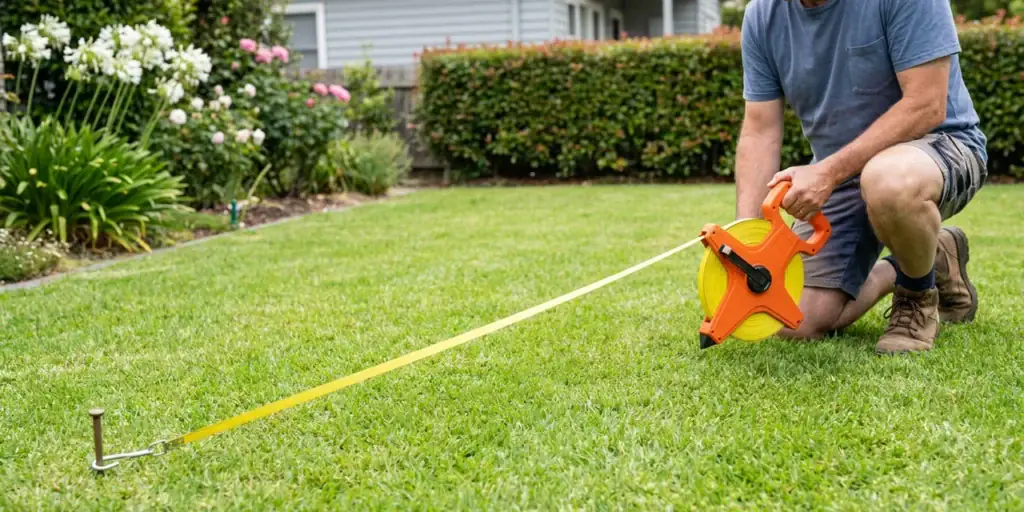

To work out your lawn area, measure it in metres and divide it into simple shapes. Calculate each section in square metres (m²), then add the sections together. Leave out garden beds, paving and any other area that won’t be lawn.
Before you measure
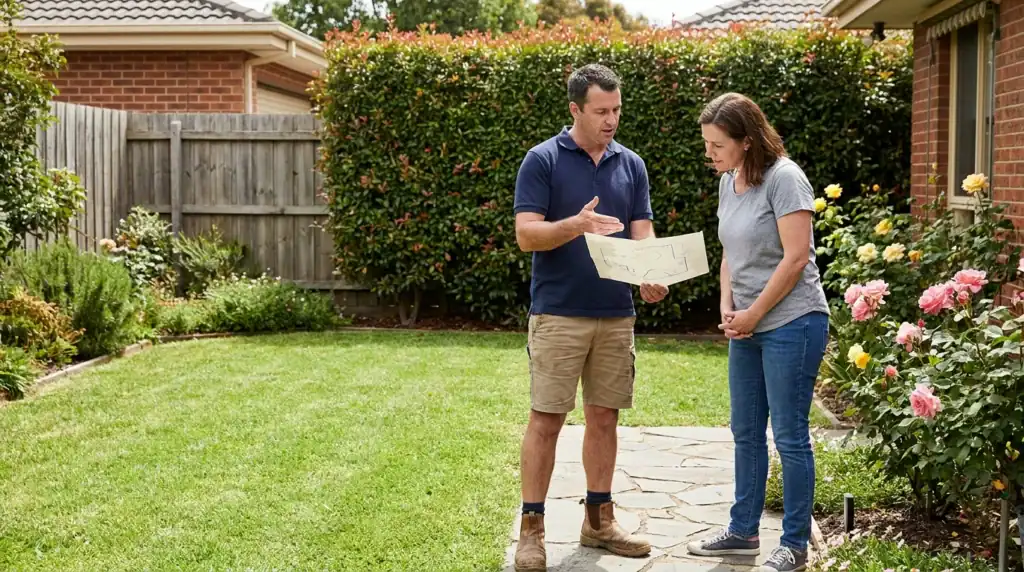
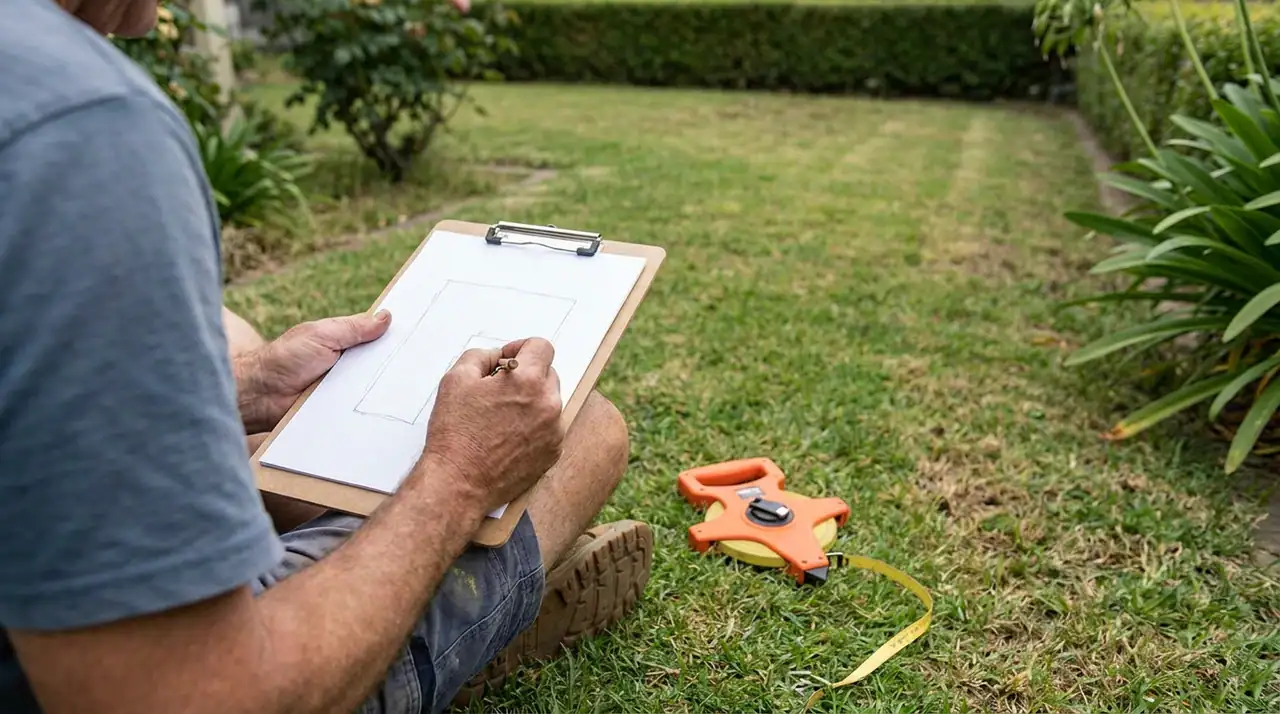
Take a tape measure and a pencil, and sketch the lawn roughly. The sketch does not need to be to scale: it is somewhere to record the measurements and keep track of each section.
Measure in metres throughout. For example, write 50 centimetres as 0.5 metres before using it in a calculation. Mark each section on your sketch so you do not count the same area twice.
Square or rectangular lawns
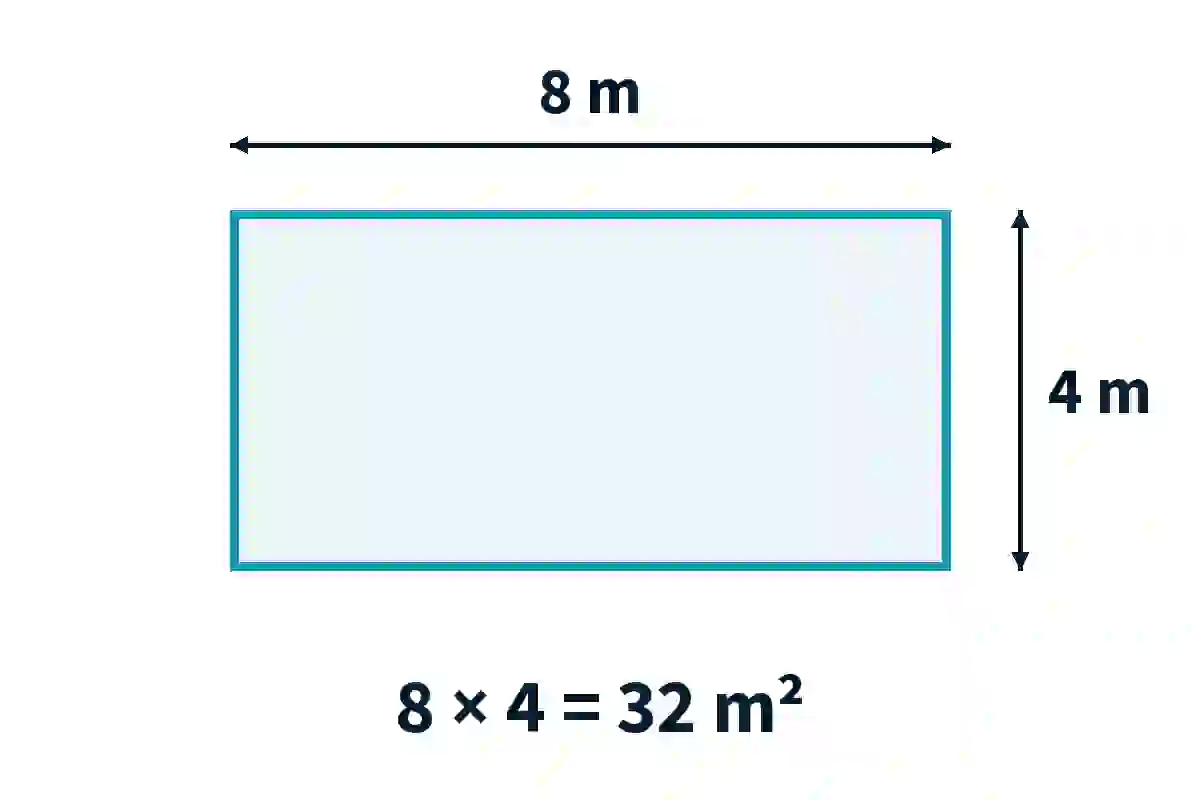
Measure the length and width, then multiply them together.
Area = length × width
For a lawn 8 metres long and 4 metres wide:
8 × 4 = 32 m²
The same formula works for a square, where the length and width are equal.
Circular lawns
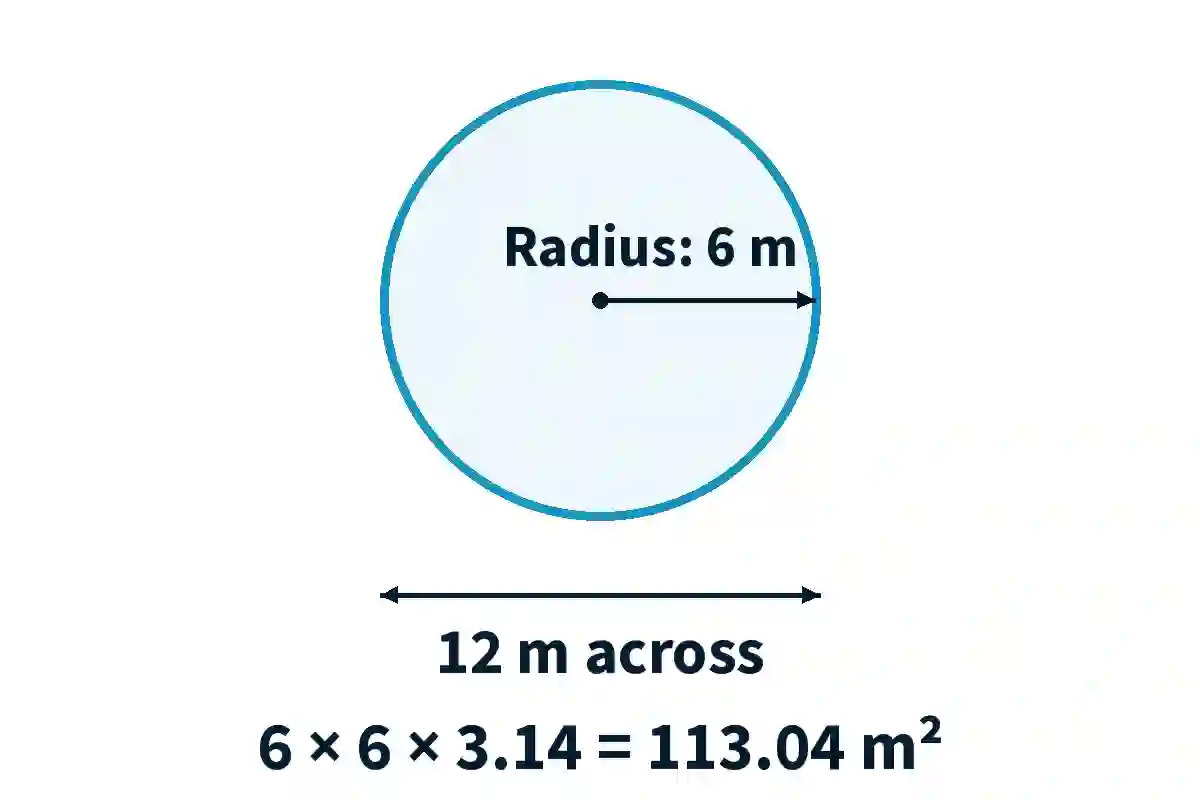
Measure across the widest part of the circle, through its centre. This is the diameter. Divide it by two to find the radius, which is the distance from the centre to the edge.
Area ≈ radius × radius × 3.14
For a circular lawn 12 metres across, the radius is 6 metres:
6 × 6 × 3.14 = 113.04 m², or about 113 m².
Use the radius in the formula, not the full diameter.
Triangular lawns
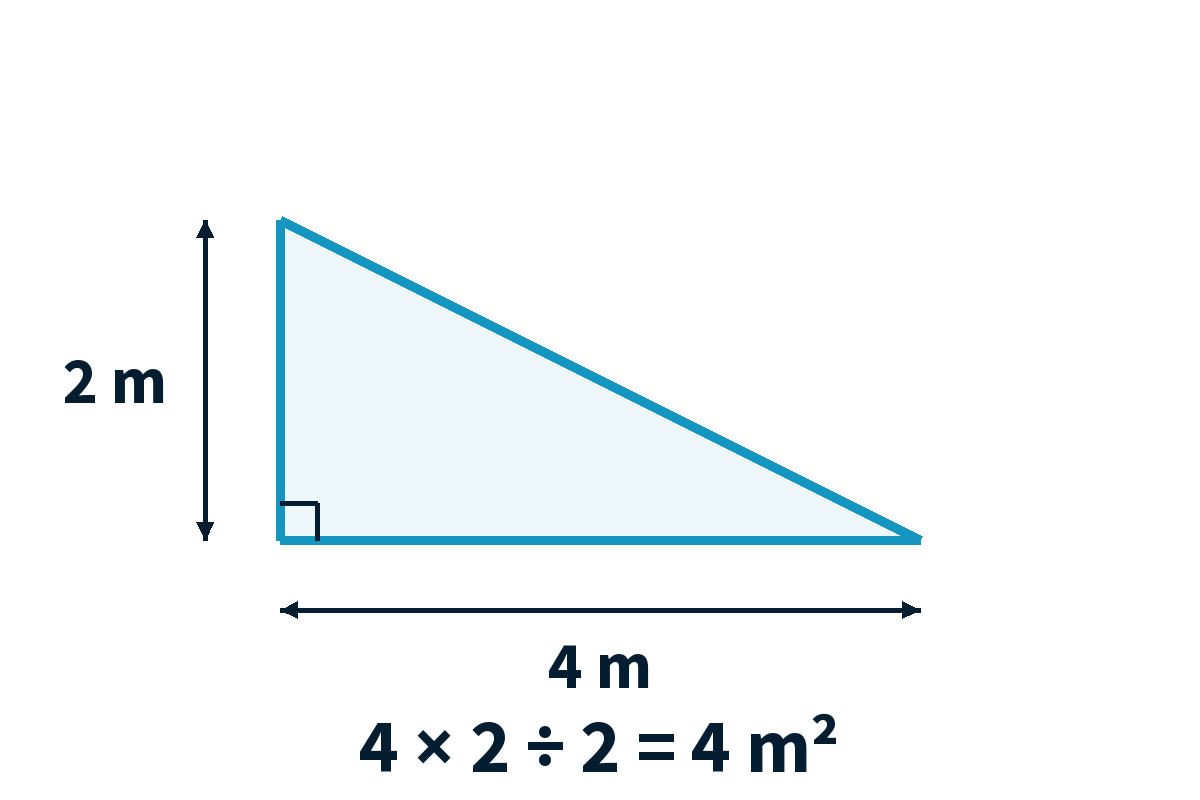
Measure the base and the height. The height runs from the base to the opposite corner at a right angle; it is not the length of a sloping side.
Area = base × height ÷ 2
For a triangle with a 4-metre base and a 2-metre height:
4 × 2 ÷ 2 = 4 m²
L-shaped lawns and other mixed shapes
Split the lawn into rectangles, triangles or parts of a circle that you can measure separately. Work out each area, then add them together without overlapping the sections.
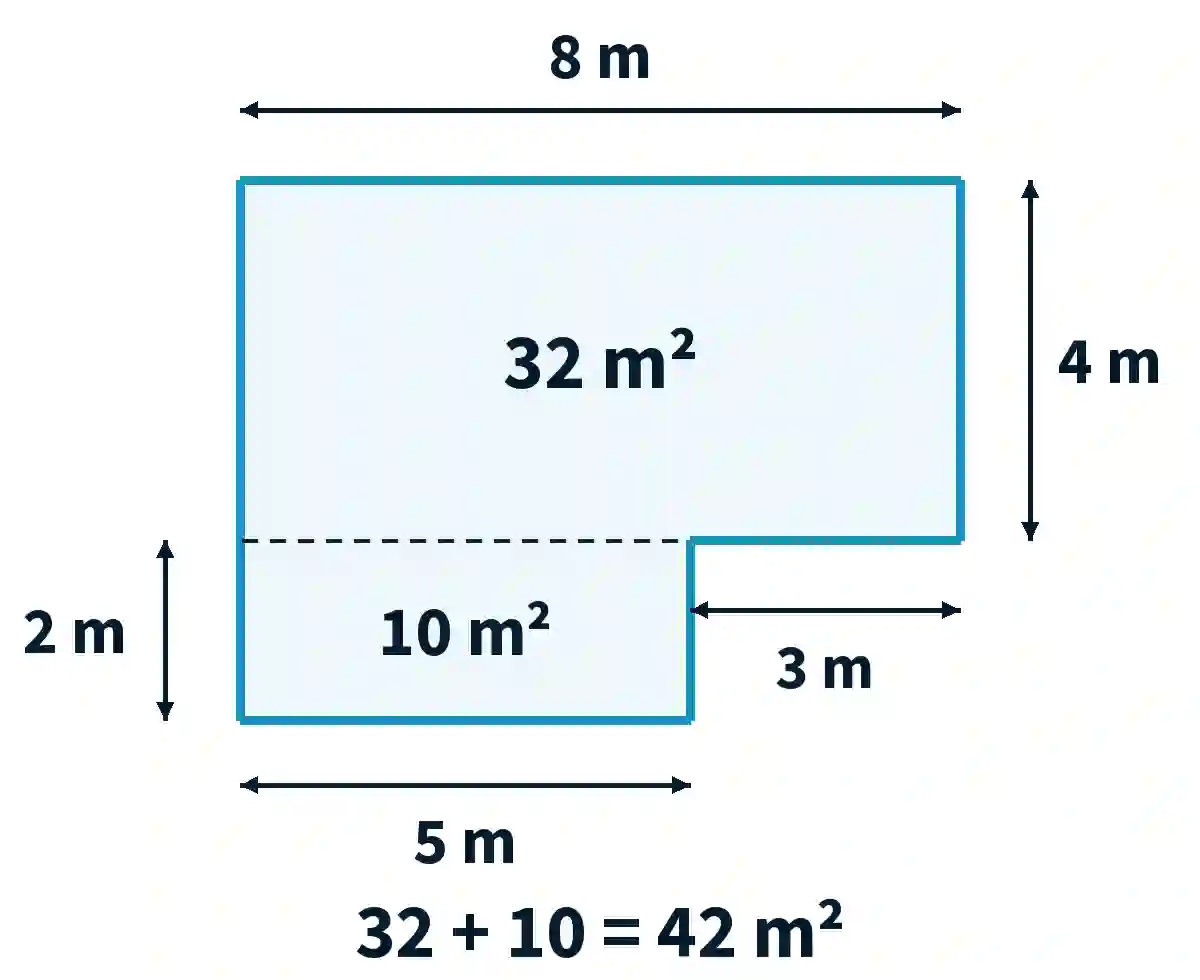
For example, a lawn shaped like an L might be an 8-metre by 4-metre main rectangle with a 5-metre by 2-metre rectangle joined along part of one long side.
- Main section: 8 × 4 = 32 m².
- Smaller section: 5 × 2 = 10 m².
- Total lawn area: 32 + 10 = 42 m².
For curved or uneven borders, use smaller sections to follow the outline more closely. Treat the result as an estimate. If your measurements include a garden bed or path, calculate its area separately and subtract it from the total.
Using your total lawn area
Keep the sketch, measurements and final area together for your project. Keep decimal places during the calculations and round the final total only when needed.
If you are choosing lawn seed, check the current blend’s application rate for a new lawn or for overseeding an existing one. Those rates can differ; your measured area is the starting point, not a universal seed quantity.
Last updated: 9 November 2026