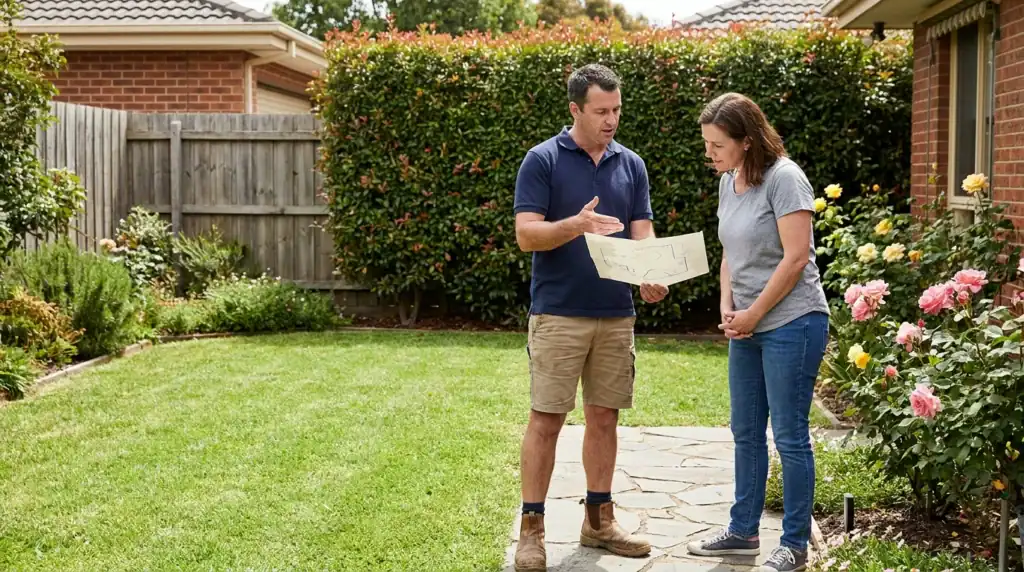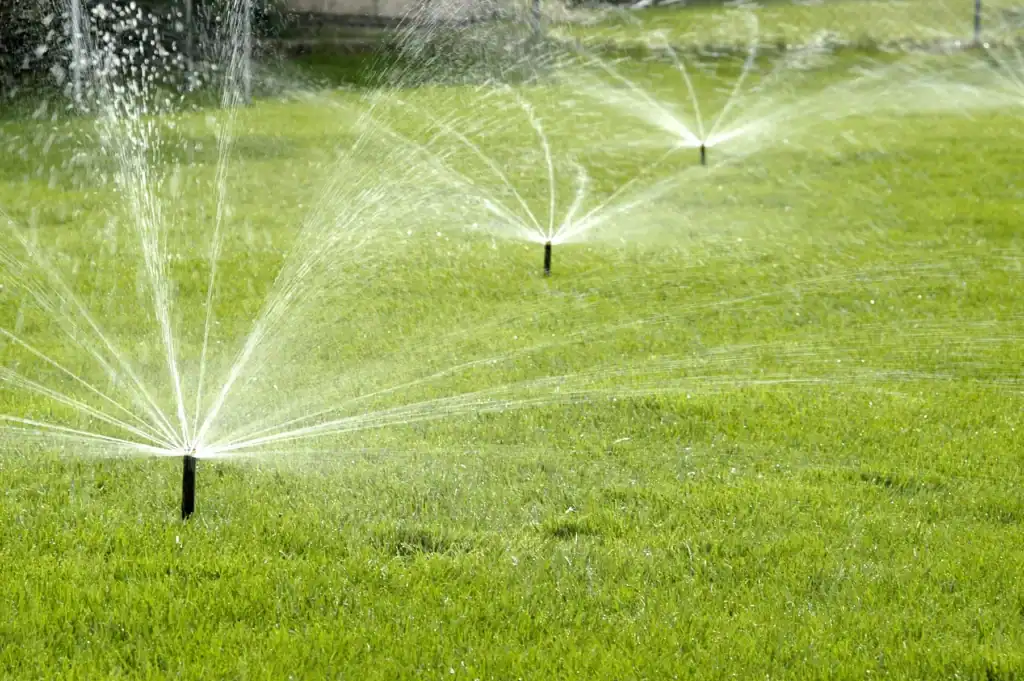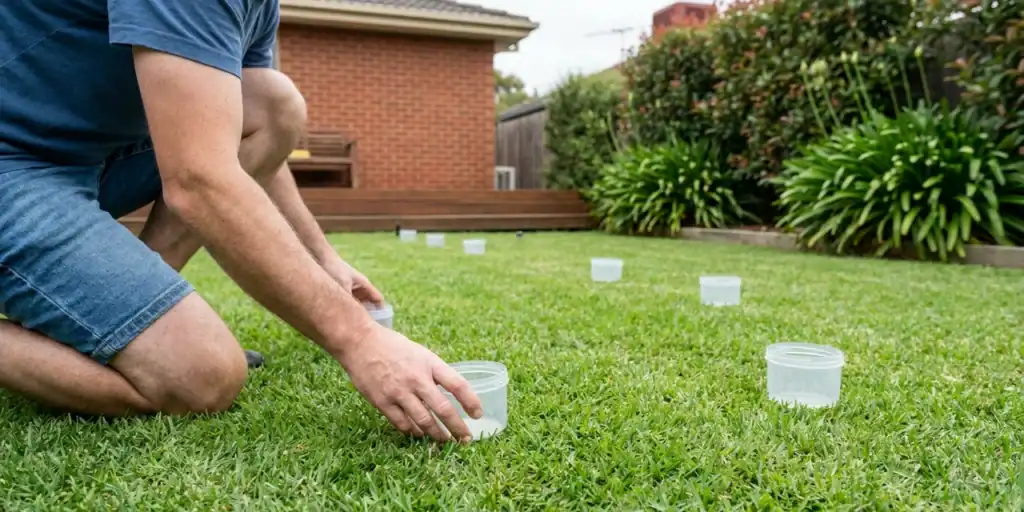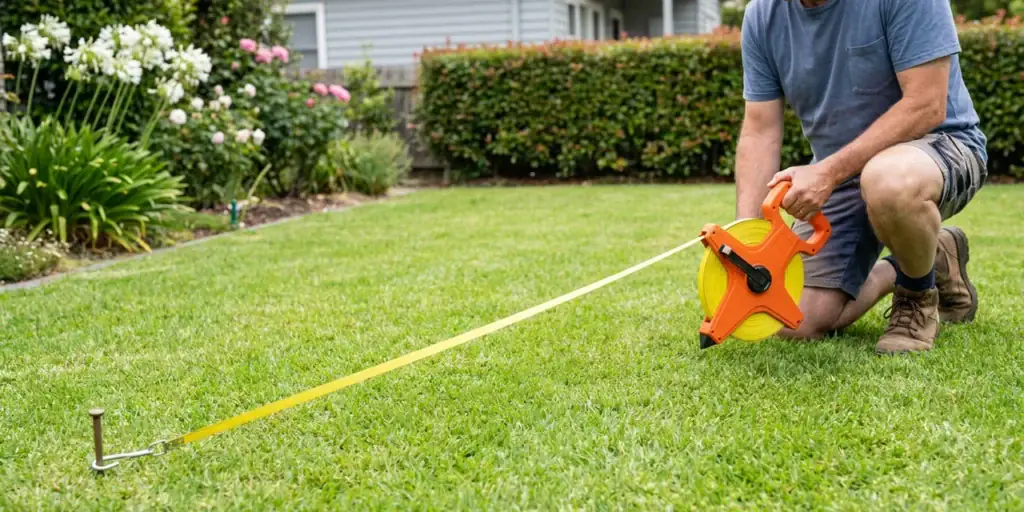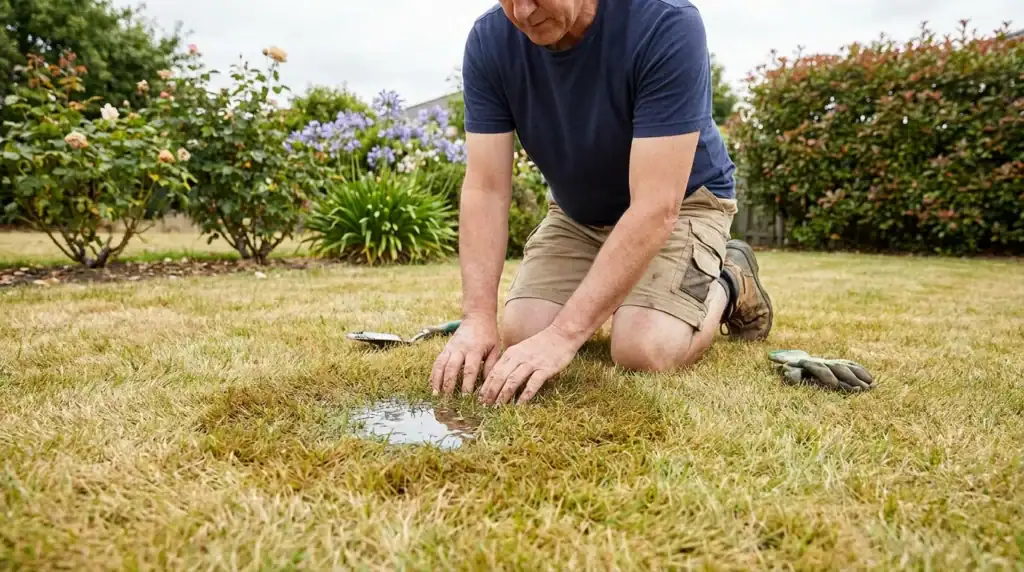

You have a leak, and it’s the irrigation system. That means, you have a patch in your lawn or garden that will not dry, a soft strip along a trench line, or a zone that used to water well and now leaves the far end short.
Fixing it is a process of elimination, working downstream from the source and using the least invasive test first. Let’s troubleshoot.
Start with what you can see
Walk the site with the controller off. Look for spongy ground, a strip that stays green while everything else dries, water in a valve box, water at one head, or turf that lifts. Note where the wet area sits relative to the boxes and the trench direction, because water follows the trench and often surfaces downhill of the break.
Confirm that water is being lost
With a meter, isolate everything else first.
- Turn off all indoor and outdoor taps.
- Stop anything that fills or circulates: washing machine, dishwasher, cooler, pool top-up, fridge line.
- Set the controller to Off so no automatic watering starts during the check.
- Read the meter, wait 30 to 60 minutes with nothing used, and read it again.
Movement means water is passing, and a leaking cistern or filling appliance looks the same, so isolate properly before concluding. A tank, bore or dam supply has no meter to watch, so look for a pump cycling with every zone off, a tank dropping faster than the garden explains, or a wet area that never dries.
Split the house from the irrigation
Close the isolation valve on the irrigation take-off and repeat the read. If movement stops, the loss is downstream on the irrigation side. If it continues, confirm the isolation valve really has closed and that other water uses have stopped. The remaining water movement may be on the still-pressurised property supply; have that assessed by a licensed plumber.
Narrow it to a zone
Run one zone at a time and watch the meter and the ground. Look for the zone that brings the wet area back or has recently started underperforming. Different zones naturally use different flows, so a larger meter reading alone does not identify a leak.
| Symptom | More likely |
|---|---|
| Wet area continues to grow with the zone off | Passing valve or a leak on a continuously pressurised line; brief drainage after shut-off can be normal |
| Wet patch only while it runs | Line break or pulled joint |
| Water around one head | Local connection, damaged riser or a riser that has not fully lifted and sealed |
| Meter moving with irrigation shut off | Another water use or a leak on the still-pressurised supply |
A valve that will not close usually means a bleed screw left open, debris on the diaphragm seat or a mechanical fault. The parts are covered in the anatomy of an irrigation valve, with replacements under valve spare parts. Isolate the water before opening a DC-latching valve (found on battery powered controllers), which can stay open without power.
Start with simple
You can usually identify the general area that a leak is located. From there, you need to think about the most likely places that a leaks could eventuate:
- Locations of recent work: Had a fence put in? New planting? Landscaping changes? Review where that work may have intersected pipework, or irrigation infrastructure.
- Sprinklers Connections: Where fittings connect to the base of sprinklers can break when trod on, or if installed incorrectly, a wet patch around a sprinkler is a big giveaway.
- Valve Connections: A constant slow leak from a valve connection that looks like nothing will become a lot of water very quickly. Check valve boxes near damp areas and ensure all connections are completely sealed
- In-line Pipe Fitting Connections: Incorrectly installed fittings can burst quite easily, hopefully you have an idea of where joins were made & you can locate elbow & tee joints. Tip: an experienced irrigation installer will usually run pipework around the perimeter of lawns or garden beds.
Cap and isolate a branch
If you truly cannot locate a leak after checking the most obvious, it may be an inline break on a pipe. In this case you may need to move to isolate or cap one branch at a time. Turn off the water and release pressure before undoing any fitting, then use a suitable pressure-rated cap. Repressurise the part still connected and repeat the check. If the unusual flow or wetting stops, investigate the branch you isolated. If it continues, check the section still connected and any other water uses.
Slow leaks can be harder to separate this way and may need a longer observation period. A meter that appears still during a short check does not rule one out. Avoid digging until the surface checks have narrowed the area.
Before you dig
Have services located first, because water, power, gas and communications share trenches. Check barbed poly joints first on a pressurised line, because an unclamped barb is a routine cause of blow-off. If the wet area is against a footing, retaining wall or slab, stop and have it assessed.
Meter, main service pipe and new mains connections are licensed plumbing. Mains-voltage electrical work, including mains connections inside controller or pump cabinets, requires a licensed electrician.
Prevention worth considering
If a system has leaked more than once, the upgrade worth making is a master valve plus a compatible flow sensor and controller. The valve gives one point of shut-off, the sensor measures what moves, and a matching controller can flag an abnormal run or, on some models, close the valve. Whether it can shut down depends on the controller, sensor and wiring, so confirm compatibility before buying and treat shutdown as a bonus. Flow meters and sensors are the place to start.
When to get help
If the checks point to a valve, the supply or a buried line, book a professional for service or installation.
Last updated: 12 November 2026